
Opal TT&C Radio
Reliable Command and Control for Modern Spacecraft
A compact, high-reliability telemetry, tracking, and command radio designed for commercial missions from Low Earth Orbit to Deep Space.
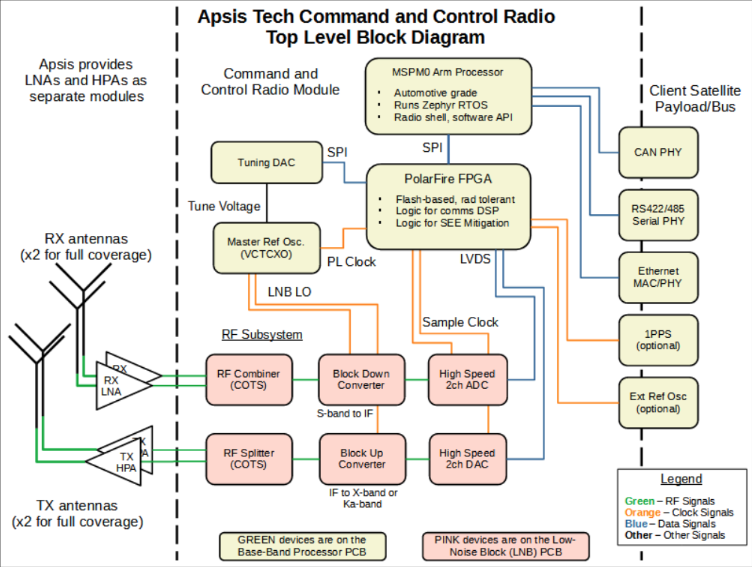
Opal combines CCSDS communications, resilient command paths, two-way ranging, flexible spacecraft interfaces, and a space-focused fault-tolerant architecture in a radio designed for modern satellite programs.
PRE-MARKET | IN DEVELOPMENT
Your Spacecraft's Most Important Link
Payloads may define the mission. But when something goes wrong, the TT&C radio is how you get the spacecraft back.
Opal is a dependable command and telemetry link that commercial satellite teams can confidently design into their spacecraft — with standard CCSDS communications, S-band uplink, X- or Ka-band downlink, redundant antennas, hardware-decoded emergency commands, and safe in-orbit updates.
The capabilities that matter when everything is working. And the ones that matter even more when it isn't.
Built Around the Command Link
Opal supports S-band uplink with X-band or Ka-band downlink, with full-duplex data rates up to 5 Mbit/s.
Supported modulation includes:
BPSK
QPSK
OQPSK
8PSK
The modem supports CCSDS protocols and provides AES-256 encryption capability.
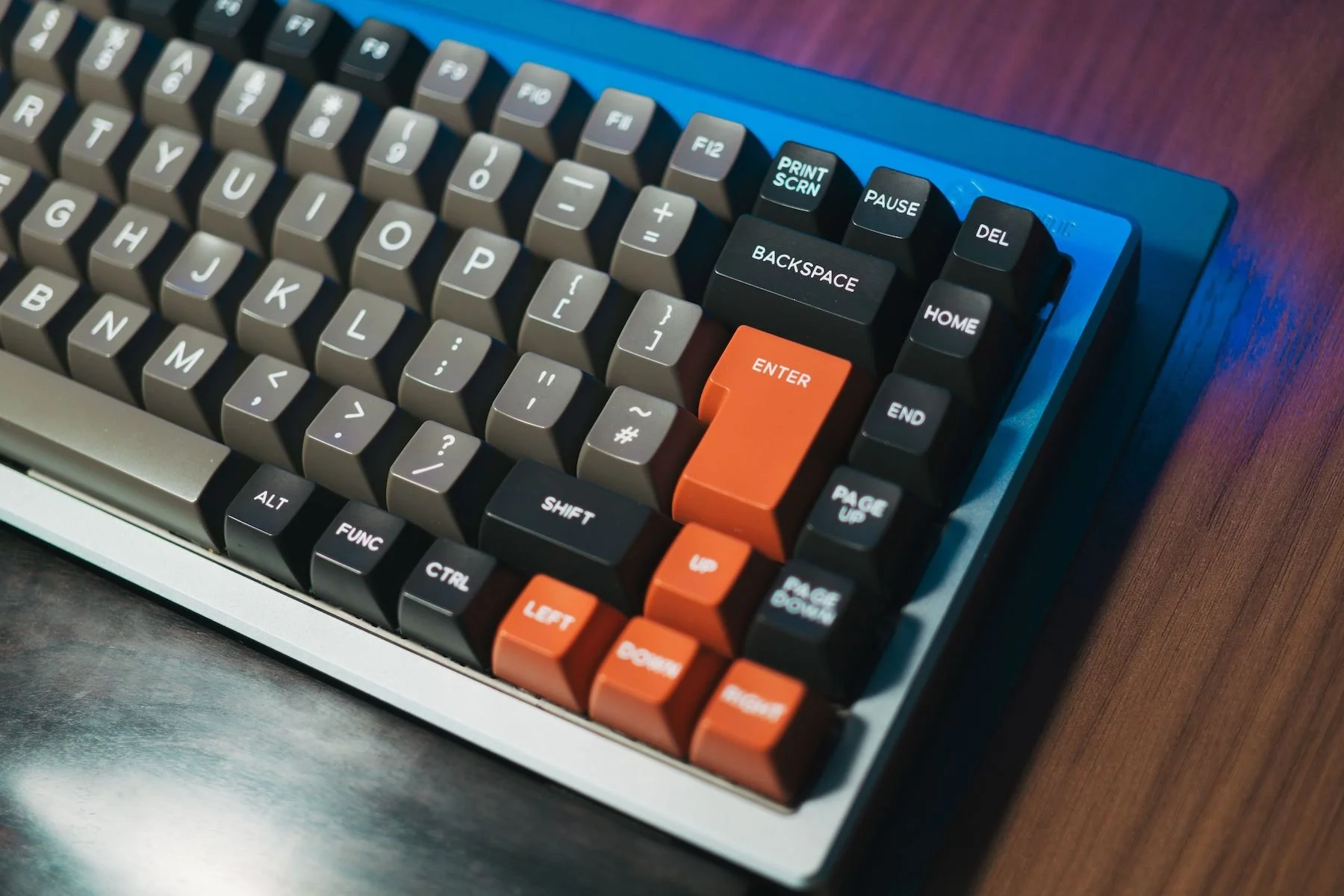
For spacecraft integration, telemetry and command traffic can be routed through serial, CAN, or Ethernet interfaces. CCSDS virtual channels can be mapped to the spacecraft interface appropriate for each data stream.
Standard where standardization matters. Flexible where your spacecraft needs it.
Engineered to Recover
Reliability isn't just about the normal case — it's about what happens when something isn't.
-
Not every spacecraft anomaly leaves the primary command system functioning normally. That's why Opal includes four hardware-decoded Firecodes designed for critical recovery functions.
The Firecode detector bypasses much of the normal software and RF receive processing chain, providing an independent path for commands such as:
Full spacecraft power-system reset
Resetting selected subsystems
Enabling critical spacecraft hardware
Other mission-defined recovery actions
These commands are implemented using dedicated 256-bit sequences and exposed through independent hardware outputs. When software isn't responding, the spacecraft still needs a way home.
-
Reliability isn't achieved by assuming nothing will fail — it's achieved by designing the system to recover when something does.
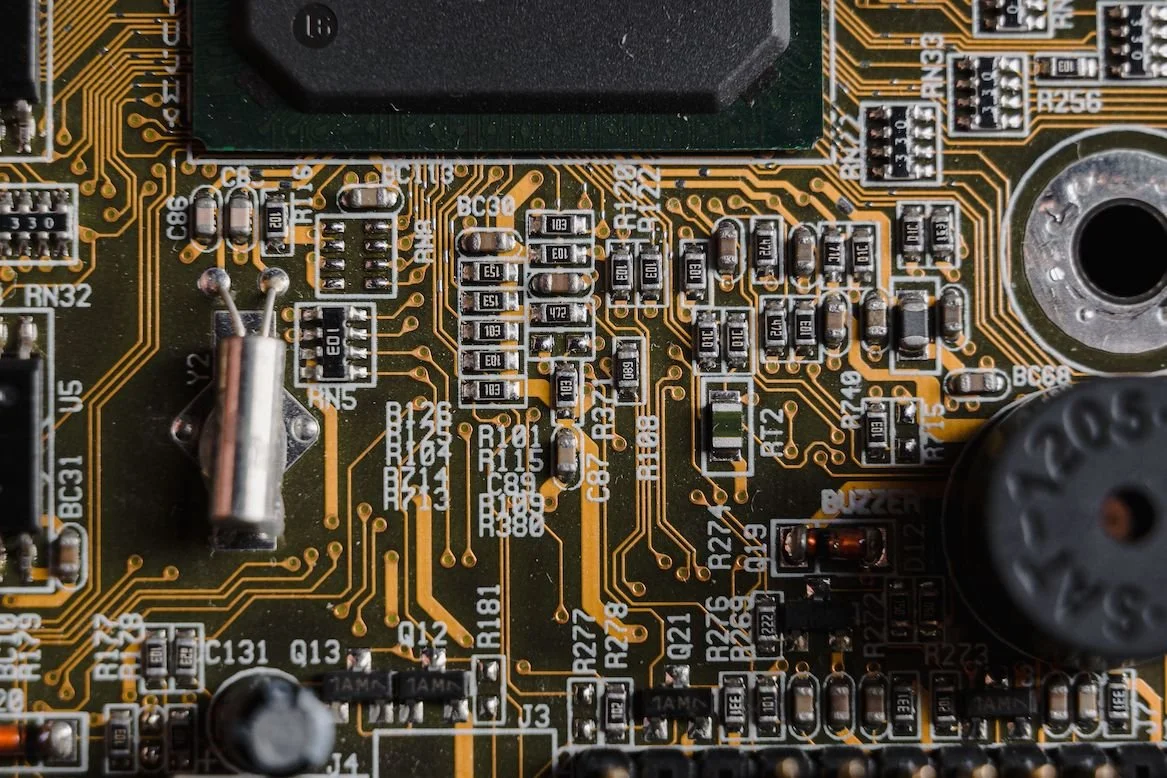
Opal's internal processor supports primary and redundant A/B boot images with automatic fault recovery, and firmware can be updated safely after launch without losing the ability to return to a known-good image. A radiation-tolerant Microchip PolarFire FPGA independently performs the modem's DSP while monitoring critical electronics for:
Over-current
Under-voltage
Over-voltage
Single-event functional interrupts
Single-event latch-up
More Than a Command Link
Full-Sphere Coverage
Small spacecraft don't always have the luxury of precision antenna pointing during commissioning or recovery.
Opal supports two receive and two transmit antenna interfaces, mounted on opposing spacecraft faces for near-spherical communications coverage — giving mission designers flexibility during tumbling, early operations, safe mode, and contingency scenarios.
External LNAs and HPAs can be configured around your mission's link requirements.
Tracking Beyond Telemetry
Opal also supports two-way symmetric ranging, allowing the TT&C link to contribute directly to spacecraft tracking.
A dedicated ranging packet protocol supports round-trip range measurements, while optional external reference-clock and 1PPS inputs add timing precision for demanding applications.
From Low Earth Orbit to deep space, the command link can do more than carry packets.

Built for Engineers
Opal provides multiple ways to interact with the radio.
For flight software, a software API accepts NSP- or CSP-formatted packets.
For integration, test, commissioning, and troubleshooting, Opal includes the Apsis Radio Shell — a command-line interface providing low-level access to the radio.
The same interface can be accessed through a physical serial connection or over the RF link itself.
That means engineers can interrogate and control the radio using familiar tooling during spacecraft integration — and retain that low-level access after launch.

Preliminary Specifications
| Uplink | 2.025–2.110 GHz |
| Downlink Options | 8.025–8.400 GHz or 25.5–27 GHz |
| Data Rate | Up to 5 Mbit/s full duplex |
| RF Output Power | Up to 2 W |
| Modulation | BPSK, QPSK/OQPSK, 8PSK |
| Protocols | CCSDS-131, -132, -231, -232 |
| Encryption | AES-256 |
| Emergency Commands | 4× hardware-decoded Firecodes |
| Spacecraft Interfaces | UART, RS-232/422/485, CAN/CANFD, 10 or 100BASE-T |
| Timing | External 1PPS + reference clock |
| Input Voltage | 10–35 VDC |
| Receive Power | 0.5 W |
| TX + RX Power | 12 W |
| Radiation | Estimated 20 krad TID |
| Vibration | NASA GEVS |
| Operating Temperature | -20°C to +50°C |
Specifications are preliminary and subject to change as development and qualification progress.

A TT&C Radio for Commercial Space
Opal is currently a pre-market product under active development by Apsis Science and Technology.
We're building it for spacecraft teams that want the reliability expected of space hardware without the cost, rigidity, and unnecessary complexity traditionally associated with aerospace communications equipment.
As development progresses, we're interested in speaking with satellite manufacturers, constellation developers, and deep-space mission teams about upcoming programs.
Tell us how your spacecraft needs to communicate.